



Carrying out a well-executed keyword analysis is not entirely straightforward. It is easy to become fixated on factors such as search volume, while other valuable aspects are either set aside or overlooked. This can, among other things, lead to optimization efforts being aimed at overly broad and/or highly competitive keywords—something that rarely produces particularly good results.
One of the most important pieces of the puzzle for succeeding with SEO—yet strangely one of the most overlooked—is understanding the intent behind a search. In SEO circles, this has come to be known as “search intent.”
In today’s article, we explain the concept, why it is so important to understand and embrace, and how you can determine the search intent behind a keyword yourself.
What is search intent?
Search intent is the underlying intention behind every search performed online—that is, the actual purpose of a search. Simplified, search intent can be divided into three main types: informational, navigational, or commercial.
Different types of search intent:
- Informational searches
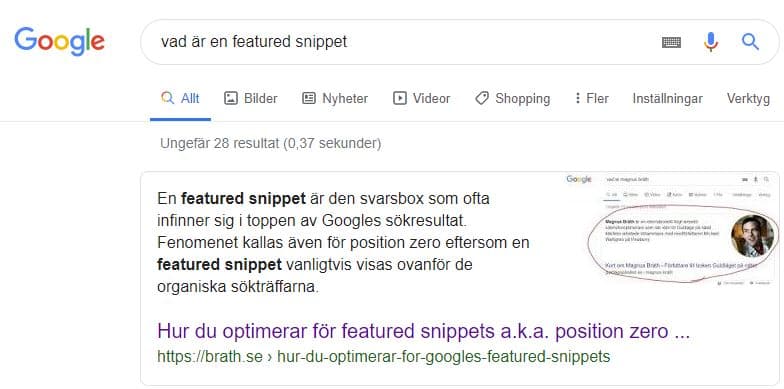
For informational searches, the primary intent is to learn more about a specific topic. These searches are often quite specific and are frequently (though not always) phrased as questions. It is also worth noting that content which best answers these questions has a relatively high chance of appearing as featured snippets.
Here are a few examples:
What is a featured snippet, Where is Stonehenge located, How do you bake apple pie, etc.
- Navigational searches
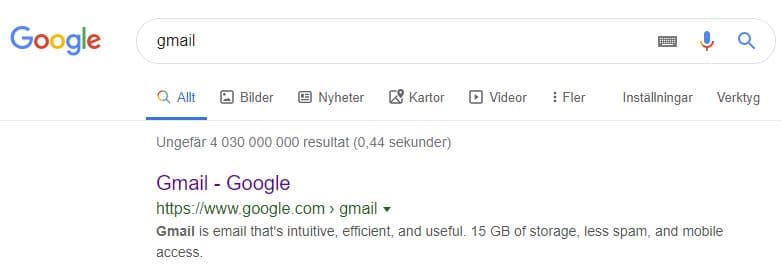
Navigational searches occur when the goal is to reach a specific website and when the user finds it easier to search for the site rather than typing in its exact URL.
Here are some examples:
Aftonbladet, Facebook, Gmail, etc.
- Commercial searches
Broadly speaking, commercial searches include queries where the user is ready to make a purchase immediately, as well as searches where there is purchase intent but the user needs to research a product or service more thoroughly. In many cases, links in reviews and similar content can lead to conversions in a later step, without the need for additional searches.
Here are some examples:
Close to a purchase
hotel deals stockholm
buy iphone 11
book cabin sälen
Research phase
best slalom skis 2019
compare loans
airpods review
Why is search intent important?
Today, Google is more capable than ever of understanding both search queries and content, and then matching them based on relevance. Because of this, it is now crucial to create content that best meets the search intent behind the queries you want to be visible for. From an organic visibility perspective, the biggest winners will therefore be those who fully understand and adopt this concept—both now and in the future.

How do you determine the search intent of a keyword?
Perhaps the most effective way to determine the search intent behind a specific keyword is to look at what ranks at the top of its search results. Thanks to user signals and other factors, Google gradually builds a very strong understanding of what type of content is being requested and how it should be presented in order to perform optimally from a user perspective.
The search engine has the hardest time determining intent for very broad, generic searches. When this is the case, it is reflected in the SERP through a highly mixed set of results. Google simply displays a wider range of results to satisfy multiple forms of search intent, until enough data has been collected to justify a clearer direction.
A clear example is the keyword “SEO,” where the search results are mixed with listings that cater to different types of search intent.
Here you will find results that explain what SEO is, guides that teach SEO, as well as agencies like ourselves offering various SEO services.

